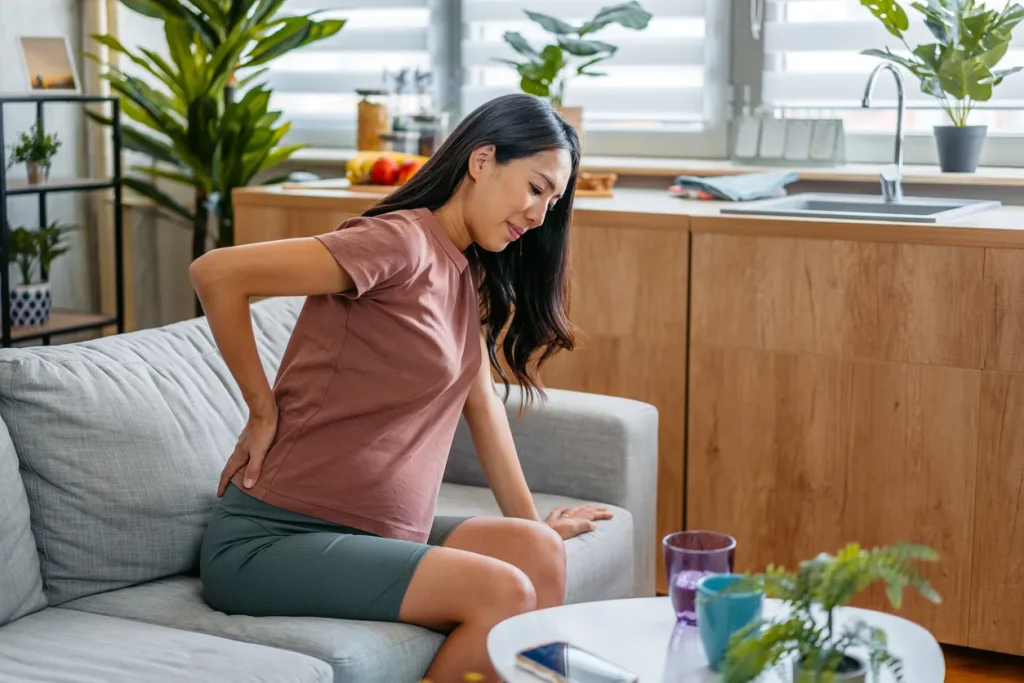
If you live in a city apartment, your daily life likely involves navigating narrow hallways, climbing stairs with groceries, and making the most of every square foot. When you add a growing bump to the mix, these everyday maneuvers—which were once automatic—can suddenly become the source of significant back pain.
The third trimester often feels like your center of gravity has been relocated to your lower back. In a small space, you might find yourself twisting to reach items, crouching in tight kitchens, or feeling trapped in one uncomfortable position for too long. However, you don’t need a sprawling suburban home or a dedicated gym to maintain your body and physical health. Managing back pain is more about the ergonomics of your daily life than the size of your square footage.
Understanding the Why: The “City Hunch”
It is easy to blame the baby for the aches, but your environment plays a role, too. Many of us spend our days hunched over laptops at kitchen tables, reaching into low cabinets, or carrying heavy bags up four flights of stairs. This repetitive strain, combined with the normal laxity of your ligaments, creates the perfect storm for spinal tension.
Real-life trimester wellness in an apartment setting requires a shift in how you inhabit your space. By becoming more aware of your posture and movements, you can mitigate the strain before it becomes a chronic issue.
Ergonomic Adjustments for Small Spaces
In a small apartment, you often have to be creative with your “work” or “rest” zones. If your kitchen counter is your desk, or your couch is your primary lounging spot, you need to ensure they support your back.
- The Counter-Height Correction: Avoid bending over the counter to prep food. If possible, pull up a stool so you are at the correct height, or bring your cutting board to the kitchen table where you can sit with proper lumbar support.
- Couch Ergonomics: Avoid the “sink-in” couch. Use firm throw pillows behind your lower back to maintain the natural curve of your spine. If your feet don’t touch the floor comfortably, use a small ottoman or a sturdy storage box as a footrest.
- Reaching Logistics: In small kitchens, cabinets are often in awkward places. Keep your most-used items on the counter or at waist level to avoid deep bending or reaching overhead.
Simple Movement Routines for Tight Spaces
You don’t need a yoga studio to find relief. Your living room rug is the perfect place for a daily movement and stretching routine that takes less than ten minutes.
- Cat-Cow: This is the gold standard for back relief. On all fours, gently arch your back, then round it. It decompresses the spine and helps the baby shift into a comfortable position.
- Wall Slides: Stand with your back against a wall, feet a few inches out. Slowly slide down until your knees are slightly bent and slide back up. This engages your core and resets your posture.
- Thoracic Rotation: Sitting cross-legged on the floor, gently twist your upper body from side to side. In small apartments, we often forget to move in the transverse plane, so this helps “unlock” the stiff upper back.
According to the American Physical Therapy Association (APTA), targeted stabilization exercises can significantly decrease the intensity of pregnancy-related back pain by supporting the core muscles that are under strain.
Creating Your Sleep Sanctuary
In a small apartment, the bed is often the only place where you truly have space to stretch out. Because you spend roughly one-third of your day there, your sleep environment must be a priority.
Small changes to your sleep and rest setup can make a massive difference:
- Pillow Positioning: Use a full-length body pillow or a combination of standard pillows to support your bump and keep your hips aligned. Keeping your top knee elevated helps keep the pelvis neutral, which takes the pressure off the lower back.
- The “Side-Transition”: When getting out of bed, roll onto your side first and push yourself up with your arms. Avoiding a “sit-up” motion prevents sudden torque on your abdominal muscles and back.
The Emotional Impact of Physical Pain
Chronic back pain isn’t just a physical hurdle; it’s an emotional one. When you can’t move comfortably in your own home, it can lead to frustration and fatigue. Practicing emotional wellness means acknowledging that this is a temporary, albeit difficult, chapter.
If the pain is making you feel isolated or overwhelmed, consider reaching out to a local prenatal community or checking our faq section for guidance on when to seek professional help. Sometimes, just knowing that others are navigating the same physical limitations in tight urban spaces can make the struggle feel more manageable.
Managing Your Environment
Your pregnancy environment should be a tool for your health. If you are in a tight space, decluttering can actually help your physical health. When items are scattered, we tend to twist and reach in ways that are hard on the back. By keeping your “living paths” clear, you minimize the risk of awkward movements and accidental trips.
When to Seek Help
While back pain is common, there is a point where it requires a professional eye. If the pain is sharp, radiates down your leg, or is accompanied by numbness, it is time to stop the DIY approach.
The National Health Service (NHS) notes that while most pregnancy back pain is related to hormonal and structural shifts, persistent or severe pain should always be evaluated by a midwife, doctor, or a physical therapist who specializes in prenatal care. They can offer specific adjustments or exercises tailored to your anatomy.
Final Thoughts on Finding Relief
Living in a small apartment doesn’t mean you are doomed to back pain. By being mindful of your ergonomics, keeping up with gentle movement, and protecting your rest, you can navigate your pregnancy with more ease.
Wellness in a small space is about intentionality. It is about choosing to move with care, setting up your environment to work for you rather than against you, and listening to your body when it says it needs a break. You are doing the hard work of growing a human, and you deserve to feel as supported and comfortable as possible, no matter the square footage.