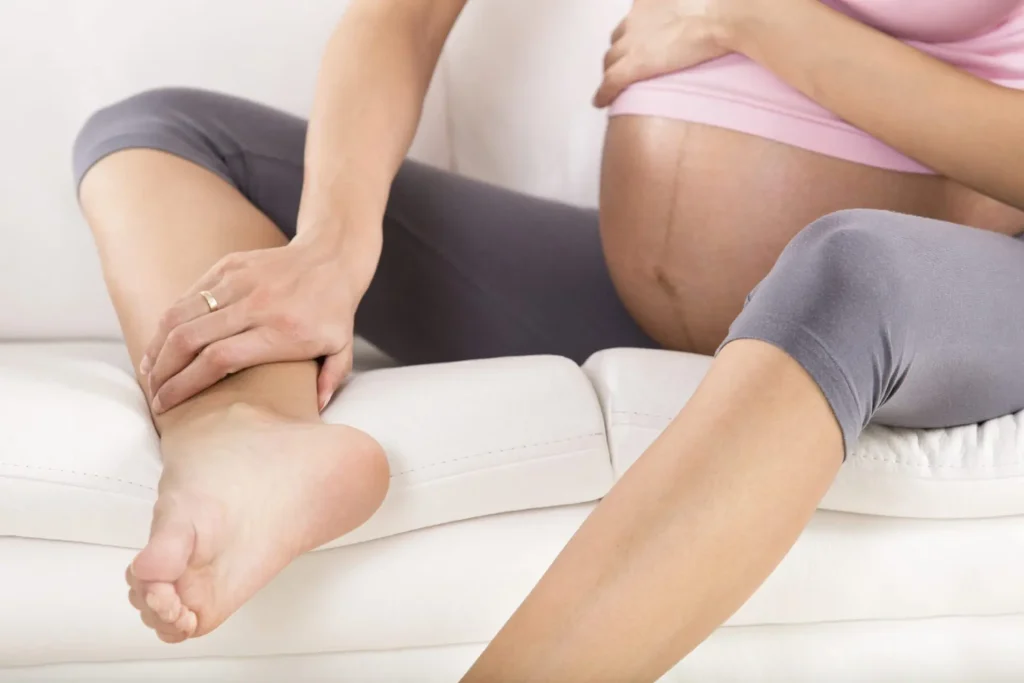
If you have reached the point in your pregnancy where your favorite sneakers feel tight or you are suddenly sporting a pair of “cankles” that appeared overnight, you are experiencing one of the most common physical shifts of the journey: edema.
While it is visually jarring to see your ankles lose their definition, swelling is a normal part of the physiological adaptation required to grow a human. Your body is doing something incredible, and understanding why this happens is the first step toward managing it. By focusing on your body and physical health, you can navigate these changes without unnecessary panic.
Why Does Swelling Happen?
During pregnancy, your body’s fluid volume increases significantly to support both your own circulation and the development of the placenta and the baby. This extra fluid, combined with the weight of the uterus putting pressure on the large veins (the inferior vena cava) that return blood from your legs to your heart, creates the perfect conditions for fluid to pool in your lower extremities.
This is a structural reality of carrying a child. However, there is a distinct difference between “normal” pregnancy puffiness and swelling that warrants a medical conversation. If you are ever unsure, checking a trusted faq page or reaching out to your provider is always the right move to ensure everything is within the healthy range.
The Role of Gravity and Movement
Because gravity works against you, the fluid naturally settles in your feet, ankles, and hands. Staying static for long periods—whether sitting at a desk or standing in one place—can exacerbate the issue. This is why movement and stretching are your best defenses.
You do not need an intense workout to keep fluid moving. Simple routines, such as:
- The Ankle Pump: Flexing and extending your feet while sitting to activate your calf muscles, which act as a pump to push blood back up the legs.
- The 10-Minute Walk: A gentle stroll around the block to keep circulation active.
- Elevated Relaxation: Propping your feet up above the level of your heart whenever you are resting to encourage gravity to pull the fluid back toward your core.
Nutrition and the Salt Myth
There is a long-standing myth that cutting out salt entirely will fix pregnancy swelling. In reality, your body requires adequate sodium and water to maintain the expanded blood volume needed for a healthy pregnancy.
Instead of focusing on restriction, lean into high-quality pregnancy nutrition.
- Hydration is Key: It sounds counterintuitive, but drinking plenty of water actually helps your kidneys flush out excess sodium and waste products, which can reduce water retention.
- Potassium-Rich Foods: Incorporating bananas, avocados, and sweet potatoes can help balance your sodium levels naturally.
- Protein Intake: Eating enough protein helps keep fluid in your blood vessels rather than leaking into your tissues, preventing excess swelling.
According to the American College of Obstetricians and Gynecologists (ACOG), swelling is generally expected, but staying hydrated and maintaining a balanced, nutrient-dense diet is the best way to support your system.
Protecting Your Comfort
As you move through your trimester wellness journey, small adjustments to your daily environment can make a massive difference in how you feel.
- Footwear Matters: Swap those stiff, narrow shoes for supportive, comfortable options that accommodate fluctuations in foot size throughout the day.
- Compression Socks: These are a game-changer. By applying gentle, graduated pressure, they prevent blood and fluid from pooling in the lower legs. Many people find that putting them on first thing in the morning is the most effective routine.
- Temperature Control: Heat causes blood vessels to dilate, which can increase swelling. Keeping your home and your workspace cool can help keep your circulation efficient. You can find more tips on creating a supportive pregnancy environment by focusing on these micro-adjustments.
The Importance of Rest
Your body is working overtime, and resting is not just for your sanity—it is for your physical recovery. Taking time for sleep and rest allows your body to reprocess the fluids that have collected during the day. Side-sleeping, specifically on your left side, can take the pressure off your main blood vessels and improve blood flow, often resulting in less swelling by the time you wake up.
When to Reach Out
While moderate swelling in the feet and ankles is a standard part of the third trimester, it is critical to distinguish it from complications like preeclampsia. If your swelling is sudden, extreme, or accompanied by any of the following symptoms, you should contact your healthcare provider immediately:
- Severe headaches that do not go away.
- Vision changes, such as blurring or seeing spots.
- Rapid weight gain over a very short period.
- Upper abdominal pain.
- Swelling in the face or hands that is sudden and severe.
Being proactive is part of responsible pregnancy care. According to the National Institutes of Health (NIH), monitoring for these specific signs is essential for early detection and management of hypertensive disorders.
Final Thoughts on Managing Swelling
Swelling is a visual reminder of the heavy, complex work your body is doing to nurture your baby. It is rarely comfortable, but it is usually temporary. By keeping your circulation active, staying hydrated, wearing supportive compression, and honoring your body’s need for rest, you can manage the discomfort and focus on the final stages of your pregnancy.
Remember that every body is unique. What works for one person might be different for you, and that is perfectly okay. Trust your intuition, lean on your healthcare team when you have questions, and give yourself grace—you are growing a human being, and that is a massive undertaking.