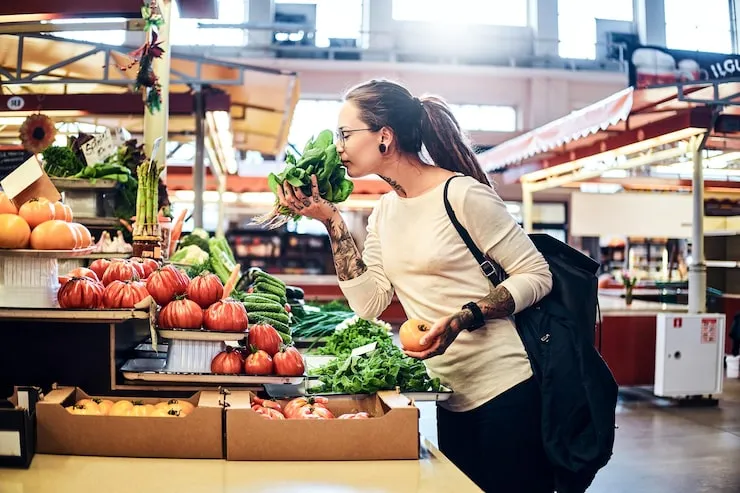
For many, the “nesting” phase of pregnancy triggers an intense urge to stock the kitchen with the most nutrient-dense, supportive foods possible. But if you live in a city or a neighborhood where a car isn’t part of your daily life, that nesting urge can quickly turn into a logistical headache. Hauling groceries on the bus, navigating the subway stairs with heavy bags, or simply realizing you can’t carry as much as you need can make pregnancy nutrition feel like a physical struggle rather than a wellness practice.
The good news is that you don’t need a trunk full of groceries to eat well. In fact, shopping without a car often leads to more intentional, frequent, and fresher food choices. By shifting your strategy from “bulk buying” to “strategic stocking,” you can maintain your trimester wellness while saving your energy for more important things—like resting or moving your body in ways that feel good.
The “Strategic Stocking” Philosophy
When you don’t have a car, you have to be the architect of your pantry. The goal is to maximize the “nutrient-per-pound” ratio of your groceries. Instead of buying huge, heavy bulk items, focus on calorie-dense, shelf-stable staples that are easy to carry and provide the foundational nutrients you need.
- Prioritize Shelf-Stable Proteins: Canned beans, lentils, chickpeas, and sardines (which are excellent for DHA) are heavy but long-lasting. Buy these in small quantities over several trips, or use delivery services for the heavy items.
- The “Weightless” Super-Load: Buy lightweight items like oats, quinoa, dried fruits, nuts, and seeds in bulk. These are the “heavy lifters” of your nutrition—they pack a massive amount of fiber, protein, and healthy fats into a small, lightweight package.
- Freeze Your Freshness: Don’t feel pressured to buy massive bags of fresh greens that will wilt before you can eat them. Frozen berries, frozen spinach, and frozen broccoli are often more nutrient-dense than fresh produce (as they are flash-frozen at peak ripeness) and weigh significantly less in your grocery bag.
Leveraging the “Neighborhood Loop”
Living without a car usually means living in a more walkable environment. Instead of viewing the grocery store as a once-a-week, massive event, turn it into a “neighborhood loop.”
Many parents find that picking up a few fresh items on the walk home from work or a quick mid-day stroll is much easier on their body and physical health than carrying a week’s worth of supplies at once. A short, gentle walk is also a great way to incorporate your daily movement and stretching, keeping your blood flow active and your energy levels stable.
The Digital Grocery Revolution
There is absolutely no shame in utilizing grocery delivery services when you are pregnant. If you are struggling with fatigue or if carrying heavy bags is causing physical discomfort, you are the perfect candidate for delivery.
The trick to delivery is to treat it as a surgical tool. Don’t just order random items; use it to get the “heavy” staples delivered to your door (flour, liquids, bulk grains, canned goods) while you pick up your fresh produce—the things you want to inspect yourself—on your own time. According to the U.S. Department of Agriculture (USDA), utilizing delivery services can significantly reduce the physical barrier to maintaining a healthy diet, particularly for those with limited mobility or transportation.
Protecting Your Emotional Wellness
The “logistics” of life can often become a source of anxiety. If you feel overwhelmed because you can’t get to the market, or if you are tired of the constant planning required to eat well without a car, give yourself permission to lower the bar.
Your emotional wellness is tied to your ability to let go of the “shoulds.” If you have to rely on a few pre-packaged healthy snacks or a meal-kit delivery service for a few weeks, you are not failing at nutrition. You are successfully adapting your pregnancy environment to your current energy levels. You can always refer to our faq to find evidence-based tips on keeping your intake balanced, even when your shopping options are limited.
The “Grab-and-Go” Toolkit
When you are shopping without a car, your bag is your biggest asset. Invest in a sturdy, ergonomic backpack rather than a shoulder tote. A backpack distributes the weight of your groceries across your shoulders and core, which is much kinder to your back and posture as your bump grows.
Inside your bag, keep a few “emergency items” that you can always pick up at a corner shop or local bodega if you are caught short:
- Bananas: Nature’s perfect, pre-packaged snack.
- Greek Yogurt: Most local markets carry single-serve options.
- Nut Butter Packets: Great for a quick boost of fat and protein.
Knowing When to Ask for Help
Sometimes, the physical act of shopping simply isn’t possible, especially if you are dealing with significant fatigue or pelvic discomfort. Remember that you can contact us if you need help finding resources in your area, or reach out to neighbors, friends, or family. Asking for someone to pick up a few bags of groceries is not a sign of weakness; it’s a sign that you are building a support network that will be vital once the baby arrives.
Final Thoughts: Resilience and Adaptability
Shopping without a car is an exercise in resilience and adaptability—two traits that will serve you well as a parent. You are learning to work with your environment, prioritize your needs, and find creative solutions to daily hurdles.
You don’t need a pantry full of bulk-buy goods to be healthy. You need consistent, nutrient-dense choices that you can reliably access. Take it one trip at a time, prioritize your comfort, and give yourself credit for the effort you are putting into your own health. You are doing the hard, beautiful work of growing a life, and you are doing it with resourcefulness and strength.